

Savannah Carlson, PT, DPT
Orthopedic & TMJ Specialist
If you’re getting ready for an orthopedic surgery—such as a rotator cuff repair, joint replacement, ACL reconstruction, or arthroscopic procedure—you’ve probably heard the term “prehab.” Prehabilitation is the process of strengthening your body before surgery so you can recover faster, reduce pain, and return to activity with more confidence.
At Sol Physical Therapy, we see that patients who complete prehab often experience:
- Improved mobility going into surgery
- Less post-operative pain
- Improved confidence out of surgery
- Improved long-term outcomes
Here are five PT-approved prehab exercises that help prepare your body for the road ahead.
(Always check with your physical therapist or surgeon before starting new exercises.)
1. Quad Sets
Great for: Knee replacements, ACL surgeries, arthroscopic knee procedures, fracture repairs in the lower body
Why it helps: Quad strength often predicts how quickly you’ll walk comfortably again after surgery. Quad sets activate and “wake up” this muscle group.
How to do it:
Sit with your leg extended.
Tighten the muscle on the front of your thigh, pushing the back of your knee gently toward the floor.
Hold 5 seconds.
Repeat 10–15 times.

2. Shoulder Blade Squeezes
Great for: Rotator cuff repairs, labral surgeries, shoulder arthroscopy
Why it helps: Many shoulder surgeries require a strong, stable base around the shoulder blade. These small postural muscles help support arm movement during recovery.
How to do it:
Sit or stand tall.
Gently pull your shoulder blades together and down, like you’re tucking them into your back pockets.
Hold 5 seconds.
Repeat 10–15 times.

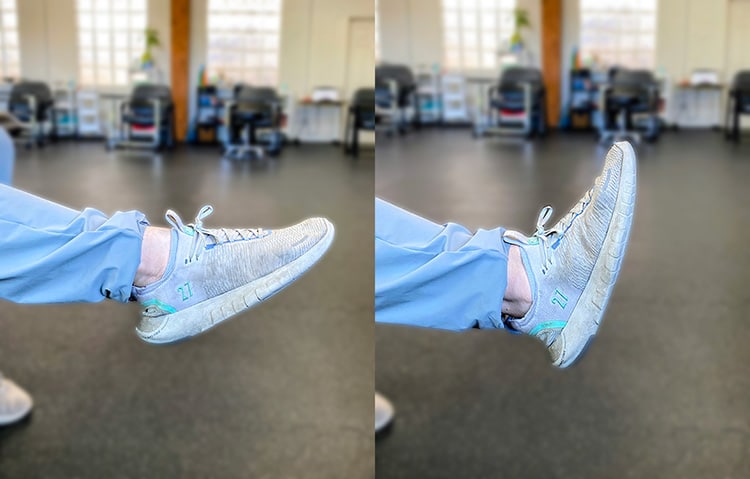
3. Ankle Pumps
Great for: Any lower-body surgery (hip, knee, ankle), fracture repairs, joint replacements
Why it helps: Ankle pumps improve circulation before and after surgery, lowering the risk of swelling and stiffness.
How to do it:
Sit or lie with your legs supported.
Point your toes away, then pull them back toward you.
Perform 20–30 slow repetitions.
4. Hip Bridges
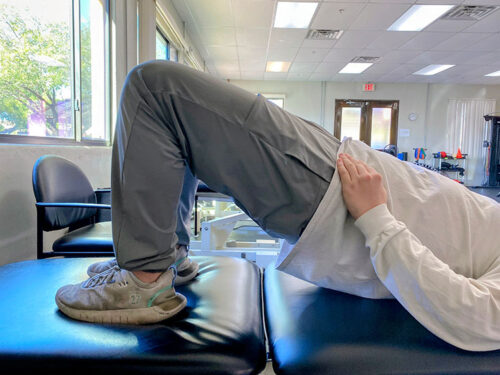
Great for: Hip replacements, knee surgery, ACL reconstruction, low back surgeries
Why it helps: Bridges strengthen the glutes and core, which help support walking, standing, and transfers once you’re recovering.
How to do it:
Lie on your back with knees bent.
Lift your hips slowly until your body forms a straight line.
Hold 3 seconds and lower with control.
Repeat 10–15 times.
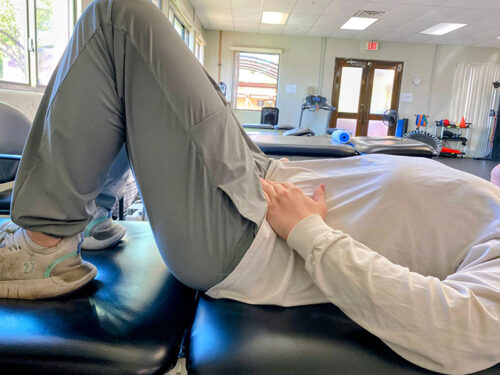
5. Gentle Core Activation (“TA Bracing”)
Great for: Spine surgeries, hip or knee procedures, general stability before any orthopedic surgery
Why it helps: A stronger core means better balance, better posture, and less strain on healing joints after surgery.
How to do it:
Lie on your back with knees bent.
Gently tighten your lower abdominal muscles, like you’re preparing for someone to poke your stomach.
Breathe normally—don’t hold your breath.
Hold 5 seconds.
Repeat 10–15 times.
Why Prehab Matters
Taking a few weeks to build strength and mobility can make a significant difference in how your body responds to surgery. Patients who complete prehab often:
Require fewer pain medications
Regain function more quickly
Feel more confident starting post-op PT
Experience fewer complications
If you’re preparing for an upcoming surgery, our team at Sol Physical Therapy can create a personalized prehab plan tailored to your movement, your surgery type, and your recovery goals.
Ready to feel stronger going into surgery?
Schedule an appointment at any of our Tucson-area Sol Physical Therapy clinics.
Savannah Carlson, PT, DPT
Savannah is an expert in the evaluation and treatment of orthopedic and sports-related injuries, specializing in rehabilitation of both upper and lower extremities, as well as the spinal region. She is dedicated to facilitating optimal recovery and guiding patients through their return to sports or work. In addition, Savannah offers specialized care in the treatment of Temporomandibular Joint (TMJ) disorders, providing comprehensive strategies for alleviating discomfort and restoring function.