

Lucas Johnston, PT, DPT
Orthopedic Physical Therapist
If you are dealing with pain or an injury, one of the most common questions is:
“Can I keep lifting, or do I need to stop completely?”
The short answer: it depends.
But in many cases, you do not need to stop lifting entirely.
In fact, the right kind of movement can often help you recover faster.
When It Is OK to Keep Lifting
Not all pain means you need to shut things down.
You can usually continue lifting (with modifications) if:
- Pain is mild to moderate and does not keep getting worse
- Symptoms improve as you warm up
- Pain stays localized (not sharp, shooting, or radiating)
- You can maintain good form and control
In these cases, lifting can actually:
- Maintain strength and muscle mass
- Improve blood flow and healing
- Prevent stiffness and deconditioning

When You Should Stop (or Get Checked Out)
There are times when pushing through is a bad idea.
Stop lifting and consider seeing a physical therapist if you have:
- Sharp or severe pain
- Pain that worsens with each session
- Radiating pain, numbness, or tingling
- Loss of strength or control
- Pain that does not improve after a few days of rest or modification
These are signs something more serious may be going on.
How to Modify Your Workouts Safely
If you are going to keep lifting, the key is modification, not avoidance.
Here is how to adjust:

1. Reduce Load
Drop the weight and focus on controlled reps.
Heavy loading is often what aggravates injured tissue.
2. Adjust Range of Motion
Avoid painful ranges while still moving as much as you can comfortably.
3. Change the Exercise
Swap movements that trigger pain for ones that do not.
Examples:
- Back squat → Goblet squat
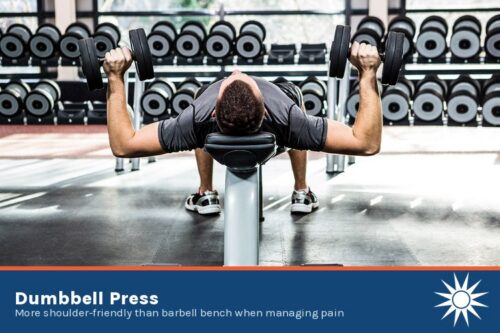
- Barbell bench → Dumbbell press
- Deadlift from floor → Elevated or trap bar deadlift

4. Focus on Form
Poor mechanics are often the root cause of lifting-related pain.
Slow things down and prioritize control.
The Biggest Mistake Lifters Make
Most people fall into one of two extremes:
- They stop everything completely, lose strength, and get deconditioned
- They push through pain, making the injury worse
The right approach is in the middle:
Stay active, but be intentional.
Can Lifting Actually Help You Recover?
Yes, when done correctly.
Targeted strength work can:
- Reinforce proper movement patterns
- Build resilience in injured areas
- Reduce the risk of future injury
This is exactly how physical therapy bridges the gap between pain and performance.

When to See a Physical Therapist
If you are unsure what is safe, that is where we come in.
A physical therapist can:
- Identify the cause of your pain
- Modify your workouts without shutting you down
- Help you return to lifting stronger than before
Final Takeaway
You usually do not need to stop lifting completely when you are injured.
But you do need to:
- Adjust your training
- Respect your symptoms
- Address the root cause
If you are dealing with pain and want to keep training safely, working with a physical therapist can make all the difference.
Ready to Get Back to Lifting?
If pain is limiting your workouts, we can help you stay active while recovering.
Schedule an evaluation with our team and get a plan that keeps you moving forward.
Below are answers to some of the most common questions about lifting with an injury.

FAQs: Lifting With an Injury
Can you lift weights while injured?
In many cases, yes. If the pain is mild and does not worsen with movement, you can often continue lifting with modifications such as reducing weight, adjusting exercises, or limiting range of motion. However, more serious symptoms should be evaluated by a physical therapist.
Is it bad to lift through pain?
Not all pain is harmful, but sharp, worsening, or radiating pain is a red flag. Mild discomfort that improves as you warm up may be acceptable, but pushing through significant pain can make an injury worse.
Should I rest or keep exercising with an injury?
Complete rest is rarely the best approach. Most injuries respond better to controlled, modified movement rather than total inactivity. The key is finding the right level of activity that does not aggravate symptoms.
How do I know if my injury is serious?
Signs of a more serious injury include severe pain, swelling, loss of strength, numbness or tingling, and symptoms that do not improve over time. If you experience any of these, you should stop lifting and seek evaluation.
Can physical therapy help me keep lifting?
Yes. A physical therapist can identify the cause of your pain, adjust your training program, and help you continue lifting safely while recovering. The goal is to keep you active, not shut you down.
When should I see a physical therapist for a lifting injury?
If your pain is not improving within a few days, keeps coming back, or is limiting your workouts, it is a good time to get checked out. Early treatment can prevent small issues from becoming bigger problems.
Lucas Johnston, PT, DPT
Lucas is a Tucson native and physical therapist who specializes in orthopedic and sports rehabilitation. He emphasizes movement-based, evidence-informed care and enjoys helping patients stay active and return to the activities they enjoy. Outside of the clinic, Lucas enjoys hiking, lifting, basketball, and cheering on the Arizona Wildcats and Los Angeles Chargers.